Jens Osterhoff

Director
Berkeley Lab Laser Accelerator (BELLA) Center
Lawrence Berkeley National Laboratory

My team and I develop compact, high-performance particle accelerators and novel laser technologies for disruptive applications in science and society. We use lasers to create waves in plasma, an ionized gas. Electrons riding these plasma waves gain as much energy in centimeters as they do in traditional particle accelerators over hundreds of meters.

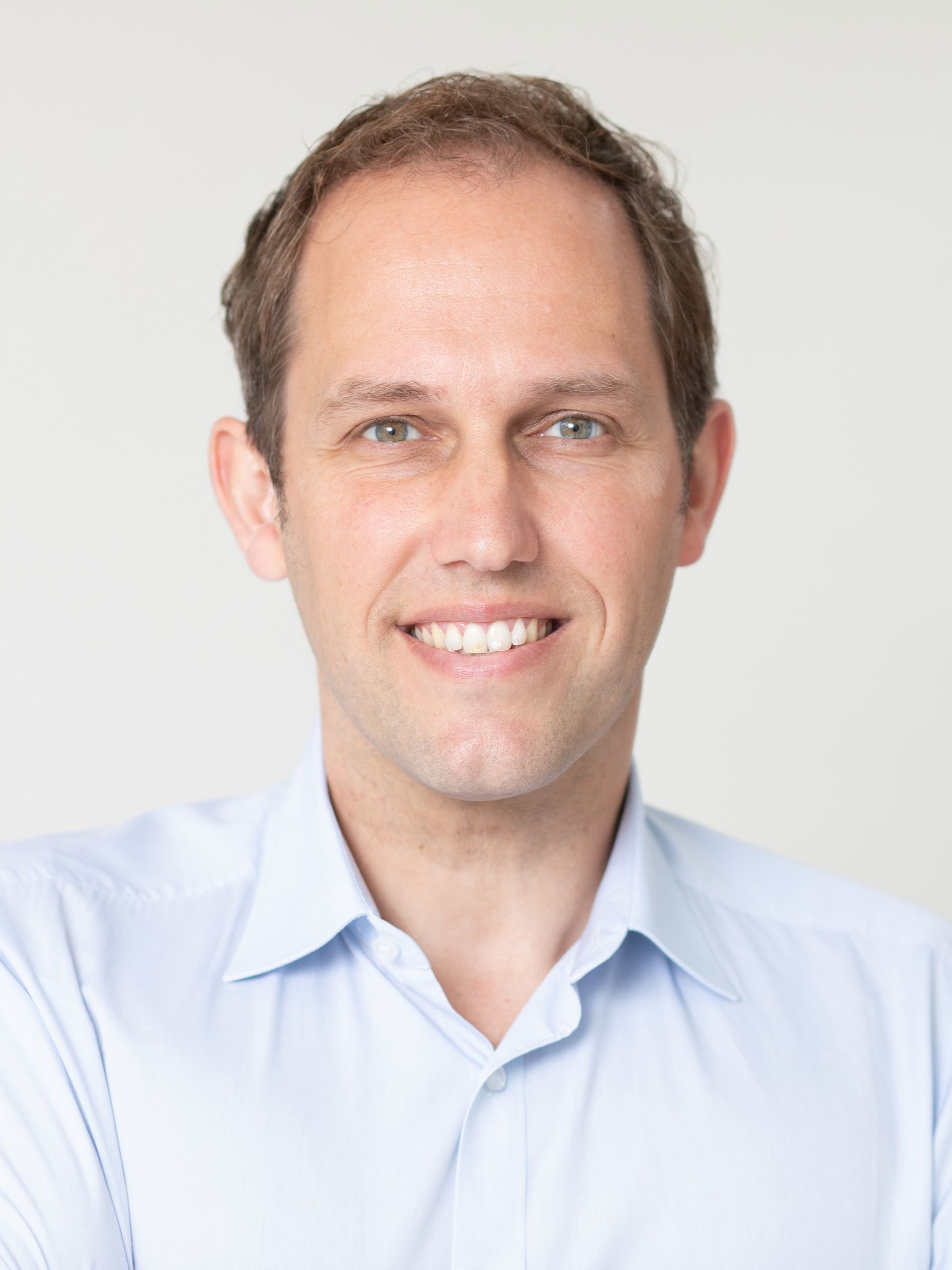
Jens Osterhoff, smiling, in a light-blue shirt in front of a pale grey backdrop.
Photo: DESY, Marta Mayer

About

Jens Osterhoff is Director of the Berkeley Lab Laser Accelerator (BELLA) Center at Lawrence Berkeley National Laboratory. His expertise covers laser- and beam-driven plasma wakefield accelerators and their applications. After a PhD with Ferenc Krausz at LMU Munich and the Max Planck Institute of Quantum Optics (2009) and a postdoc at Berkeley Lab, he built plasma-accelerator research in Hamburg from 2010 to 2023, conceiving and leading DESY's FLASHForward facility. He rejoined Berkeley Lab in 2024 and was elected a Fellow of the American Physical Society (APS) in 2026.

Longer bio

Jens Osterhoff is Director of the Berkeley Lab Laser Accelerator (BELLA) Center at Lawrence Berkeley National Laboratory, a role he has held since July 2025. His research spans laser- and beam-driven plasma wakefield accelerators and their applications, from compact light sources to future particle colliders.

He studied physics at the University of Würzburg and earned a Master of Arts in physics at the University of Texas at Austin in 2004 with Todd Ditmire. He received his doctorate from LMU Munich in 2009 for work on laser-wakefield acceleration at the Max Planck Institute of Quantum Optics under Ferenc Krausz, followed by postdoctoral research at LMU and, with Wim Leemans, at Berkeley Lab on staging laser-plasma accelerators.

In 2010 he moved back to Germany and started a Helmholtz Young Investigator Group at Universität Hamburg. In 2013 he founded the plasma wakefield accelerator group in DESY's Particle Physics Division, and from 2020 led the Plasma Accelerator Department in the DESY Accelerator Division. At DESY he conceived, realized, and directed FLASHForward, a leading beam-driven plasma accelerator facility. Its team demonstrated energy-spread preservation at high efficiency, beam emittance preservation, and a plasma recovery time compatible in principle with multi-megahertz repetition rates. In 2023 he was a full professor at Universität Hamburg and DESY's Lead Scientist for plasma acceleration.

Returning to Berkeley Lab in 2024 as Senior Scientist and BELLA Deputy Director, he helped to initiate a community design study for a 10 TeV particle collider based on wakefield technology and took a leading role in the kBELLA initiative, which aims to increase the average power of plasma wakefield accelerators by orders of magnitude. kBELLA would open new opportunities for groundbreaking applications across multiple scientific disciplines, in industry, and for society. Jens received DESY's Bjørn H. Wiik Prize in 2021 and was elected a Fellow of the American Physical Society in 2026.

Citation for his election as an APS Fellow

“For pioneering experimental advances in laser- and beam-driven plasma wakefield acceleration, including in beam stability, preservation of beam quality, and high-repetition-rate operation, and for distinguished leadership in the global advanced accelerator community.”

Continue to Research
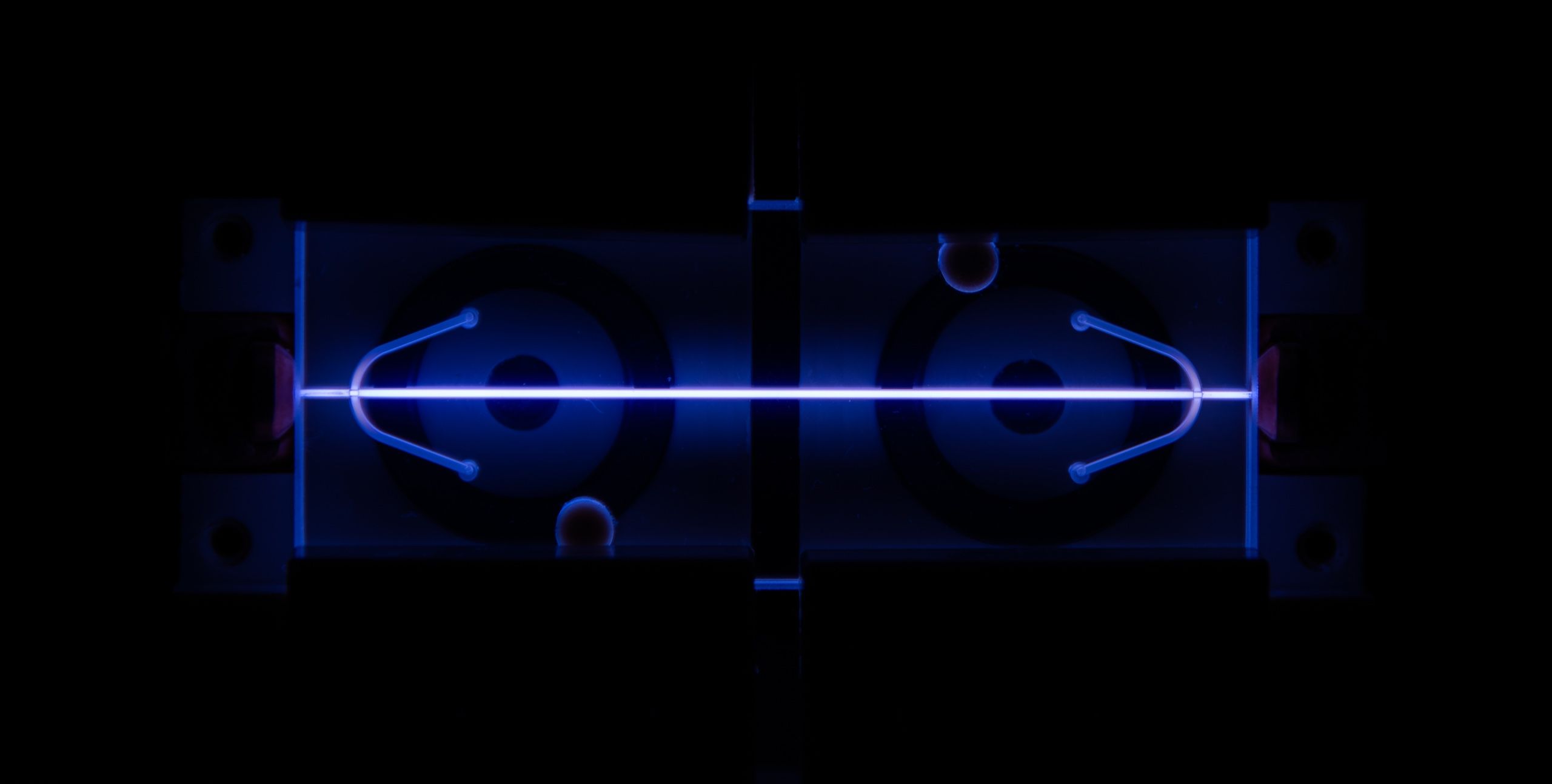
A plasma capillary glowing violet inside a dark vacuum chamber.

Research

Photo: DESY, C. A. Lindstrøm

Wakefield acceleration

An intense laser pulse or a dense bunch of charged particles sent through a plasma drives a wave in its wake. The electric fields in that wave are up to a thousand times stronger than in the radio-frequency cavities of today's accelerators. This makes plasma accelerators ultra-compact, meter-scale instead of kilometer-scale, with profound implications for applications. I have worked with both types of drivers: lasers since my doctorate in Munich, where we produced electron beams of then-unprecedented stability from a gas cell, and particle beams since initiating FLASHForward.
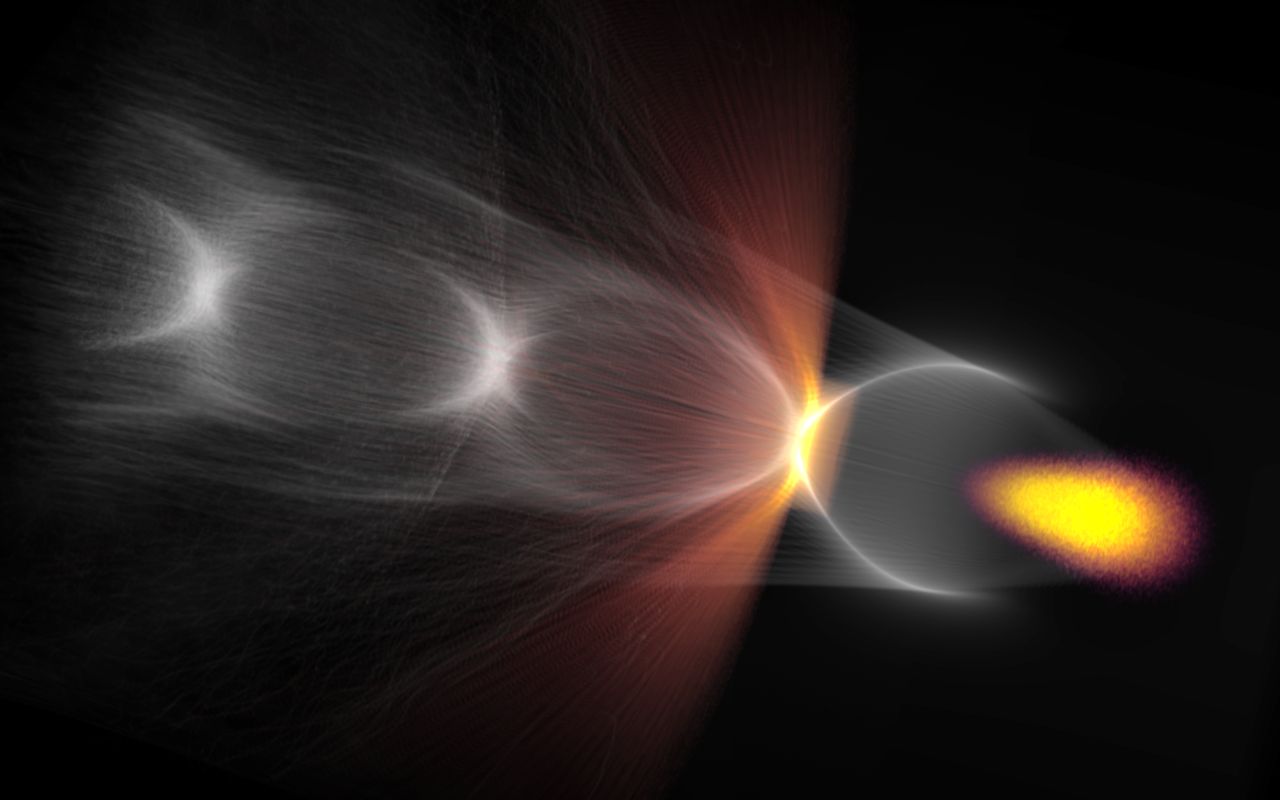
Simulation of a beam-driven plasma wakefield: a glowing electron bunch, trailed by white, bubble-shaped plasma waves.
Image: DESY, simulations by A. Martinez de la Ossa

Beam quality & repetition rate

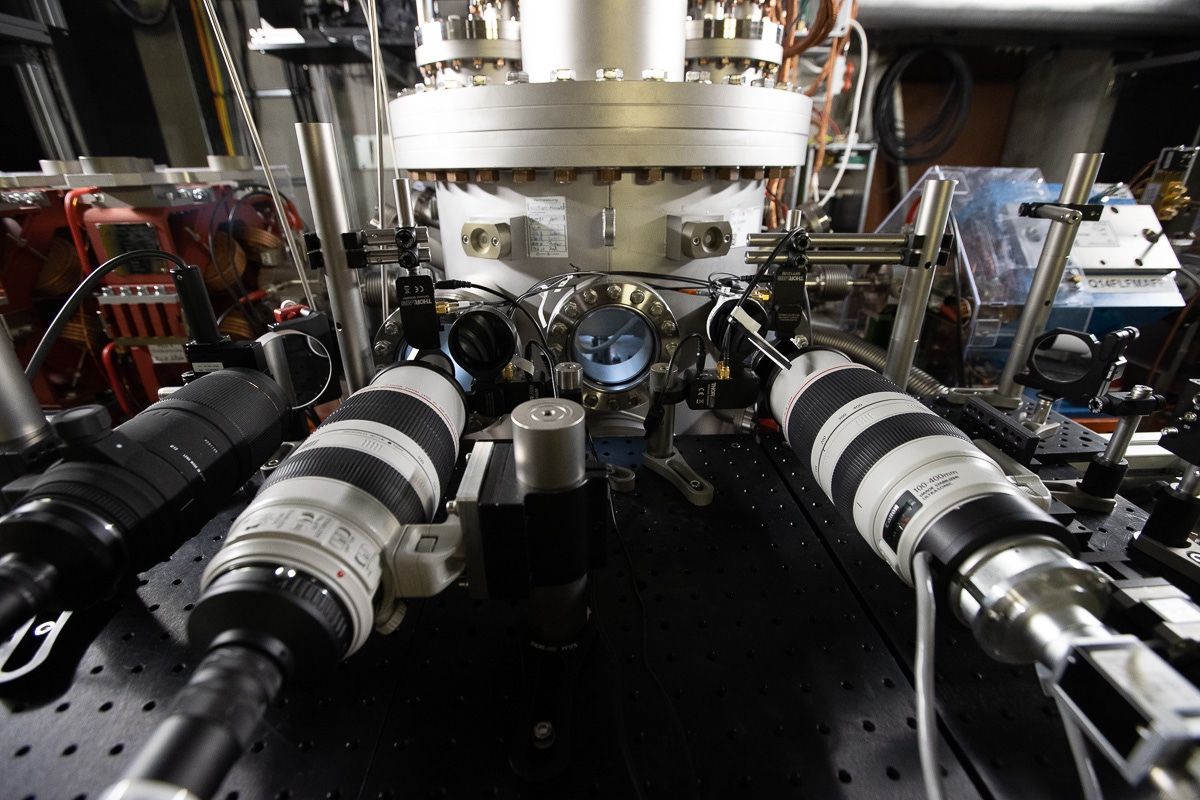
Accelerator applications require specific beam properties and high beam power. At DESY I led FLASHForward, a plasma-accelerator experiment at the FLASH free-electron laser. There our team showed that a plasma stage can transfer energy efficiently while maintaining low beam energy spread and emittance, and that the plasma recovers within tens of nanoseconds from an acceleration event, fast enough in principle to deliver multi-million beams per second.

Large camera lenses aimed at the windows of a vacuum chamber in an accelerator laboratory.
Photo: DESY, D. Nölle

Plasma optics

Plasma can focus as well as accelerate. Active plasma lenses focus electron beams strongly without spoiling their quality, and in collaboration with the Max Born Institute in Berlin we showed that a plasma lens can efficiently focus attosecond pulses of extreme-ultraviolet light.

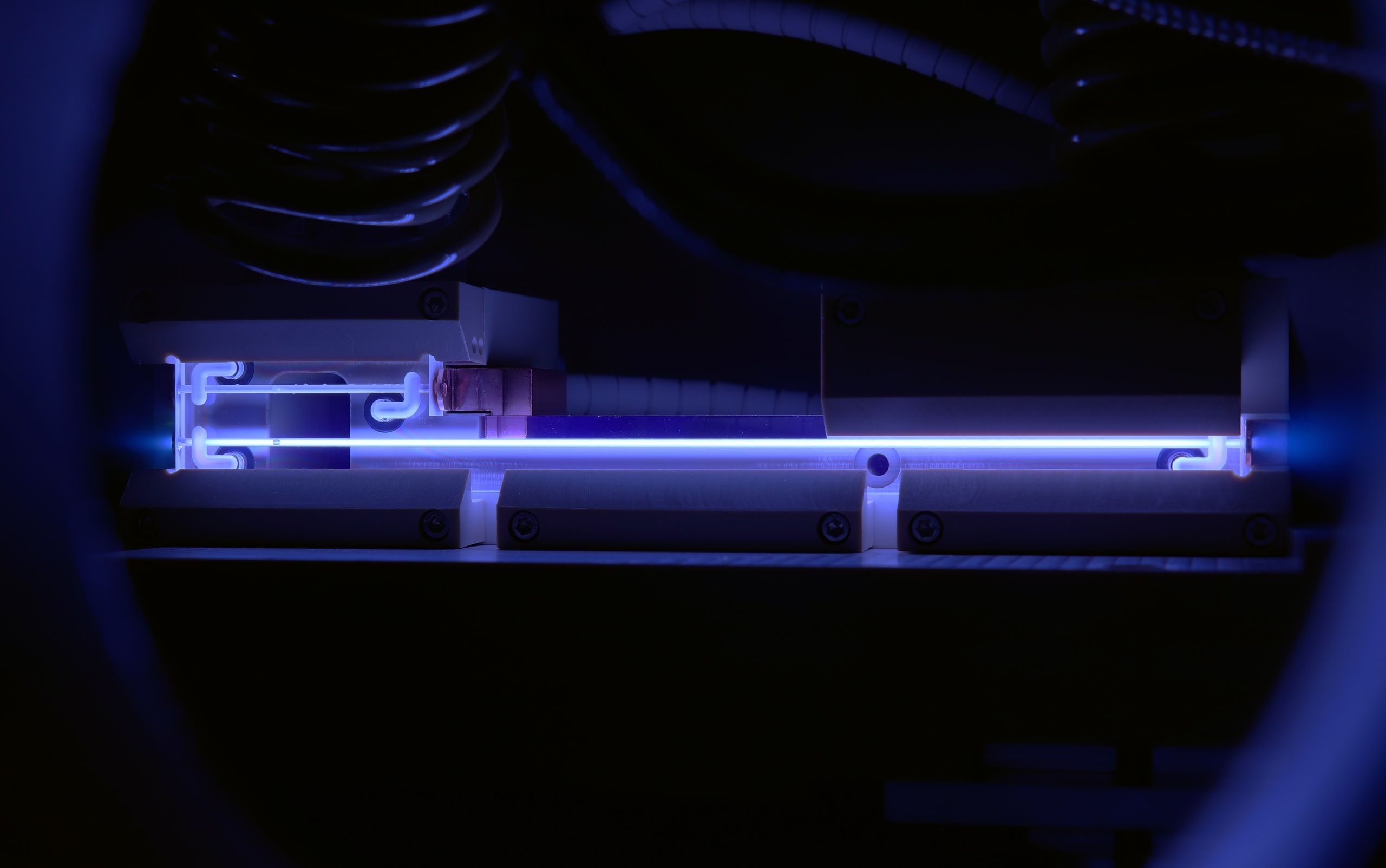
A small transparent plasma cell with a glowing blue discharge channel against black.
Photo: DESY, M. Thévenet

The next frontier

The next frontier is stability and control: applications need tailored beams that are the same shot after shot, many times per second. Achieving this has motivated my work since my doctorate, when our gas-cell beams drove a compact soft-X-ray undulator source, a first step toward plasma-driven free-electron lasers. Machine learning now helps us to tune these machines and keep them stable. At the BELLA Center, a laser-plasma accelerator has driven a free-electron laser to more than a thousandfold gain, and has since kept it running stably for more than eight hours without operator input. kBELLA, our proposal for a kilohertz laser-plasma accelerator facility, will take stability and control to the next level.

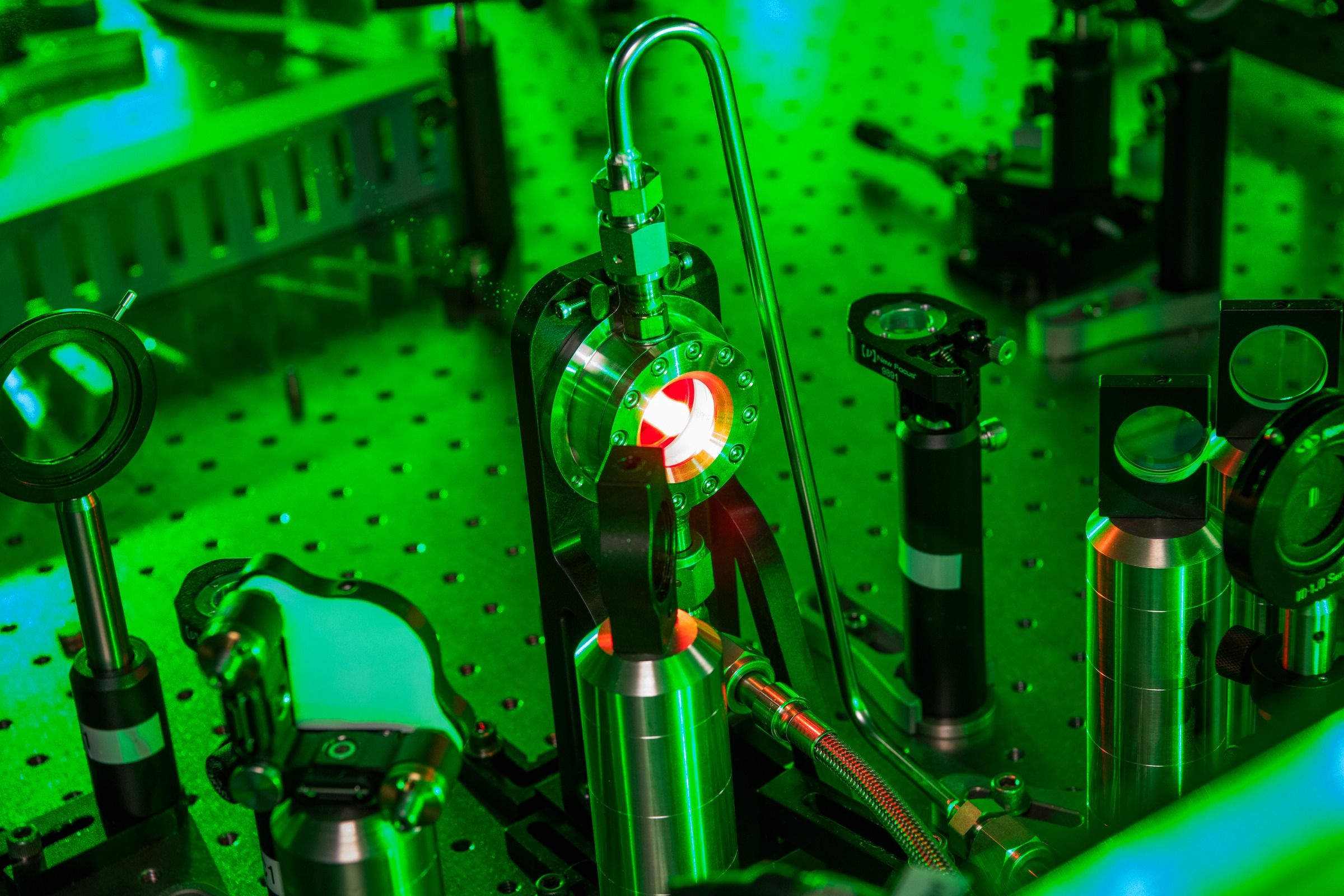
Green laser light over the optics on an optical table at the BELLA Center; in the middle, a small chamber whose window glows red.
Photo: Robinson Kuntz/Berkeley Lab. © The Regents of the University of California, Lawrence Berkeley National Laboratory. Cropped. CC BY-NC-ND 4.0

Selected publications

  1. 2026
    Beam-driven plasma wakefield acceleration

    Reviews of Modern Physics accepted, in press arXiv:2504.05558

    C. A. Lindstrøm, S. Corde, R. D’Arcy, S. Gessner, M. J. Hogan, M. Gilljohann and J. Osterhoff

  2. 2026
    Plasma lens for focusing attosecond pulses

    Nature Photonics 20, 151

    E. Svirplys et al.

  3. 2024
    Emittance preservation in a plasma-wakefield accelerator

    Nature Communications 15, 6097

    C. A. Lindstrøm et al.

  4. 2022
    Recovery time of a plasma-wakefield accelerator

    Nature 603, 58

    R. D’Arcy et al.

  5. 2021
    Energy-spread preservation and high efficiency in a plasma-wakefield accelerator

    Physical Review Letters 126, 014801

    C. A. Lindstrøm et al.

  6. 2020
  7. 2018
    Emittance preservation in an aberration-free active plasma lens

    Physical Review Letters 121, 194801

    C. A. Lindstrøm et al.

  8. 2009
    Laser-driven soft-X-ray undulator source

    Nature Physics 5, 826

    M. Fuchs et al.

  9. 2008
  10. 2007

All 108 peer-reviewed publications (plus 3 accepted and 6 under review): CV, Google Scholar and ORCID.

Talks, interviews and articles

Talks and interviews

Articles

Press

DESY

Berkeley Lab

Continue to Contact

Contact

jens@osterhoff.one